About Dr. Paul
The Eleven-Year-Old and the Cassette Tape
When I was eleven, I wandered into Sam’s Variety Store in Floral Park, New York, and discovered a cassette tape promising to help people “Quit Smoking with Self-Hypnosis.” I didn’t smoke, but I was fascinated with the idea of hypnotizing myself. That tape ignited a lifelong curiosity about human behavior, transformation, and how we help each other through desperate times.
I didn’t know then that this childhood fascination would lead to over 30 years in the psychotherapy field—or that it would eventually culminate in questioning many of the assumptions I’d been taught about what makes therapy effective.
The Day They Fed the Ducks
Early in my studies, a psychology professor shared a story that lodged in my mind for decades. He’d been working with a depressed client for months, feeling stuck and doubting whether therapy was helping. On impulse, he suggested they hold their session outside on a bench by a lake. That session involved little more than sitting together, feeding ducks, saying very little.
This seemingly insignificant day led to profound changes. The client referenced “the day we fed the ducks” in every subsequent session. My professor was never again stuck with this client.
At the time, I had no framework to understand why such a simple act could matter so much. But it planted a question that has guided my work ever since: What actually takes place in psychotherapy, and why is it helpful?
The Job and the Calling
After decades of practice, teaching, and supervision, I’ve come to distinguish between the job of being a therapist and the calling to be therapeutic.
The job includes the necessary mechanics: billing, diagnosis, treatment planning, documentation, licensure. These matter. But they’re rarely why we entered this field.
The calling is harder to articulate because it’s holistic—a way of being rather than a set of tasks. It’s about bearing witness to suffering in ways that heal. Accepting people for who they are. Trusting the potential and wisdom inherent in all human beings. Being present with despair without rushing to fix it.
I suspect therapists burn out when we focus too heavily on the job and lose sight of the calling. Resources abound for learning to do the job. But embracing the calling requires seeking out people who understand this distinction and have spent time cultivating it.
From Curiosity to Critique
My temperament has always leaned toward curiosity over certainty. I’m naturally drawn to sitting with questions rather than rushing toward answers, exploring alongside someone rather than telling them what to do. This way of being shapes everything about Transformational Inquiry—the emphasis on curiosity over labeling, comfort with ambiguity, honoring clients’ wisdom rather than imposing expert solutions.
Bradford Keeney—who founded the Ph.D. program in family therapy at Nova Southeastern University where I studied—once observed in a workshop that therapy models are really just reflections of the personalities of the people who developed them. He was right. These ideas grow from my own way of seeing the world—but I hope they speak to others who share these intuitions about healing and human connection.
What I’ve learned through decades of practice is that we’ve made therapy more complicated than it needs to be. Models suffer from excessive complexity and jargon that, while intellectually stimulating, often becomes a barrier to actual therapeutic connection. The answer revealed itself in that story about feeding ducks: it’s about connection.
My work—articulated in Being with People: Transformational Inquiry in Psychotherapy—represents the culmination of that questioning. It’s a distillation of insights gathered through private practice, academic teaching, clinical supervision, and my own journey of growth.
What I Do Now
I’m Core Faculty at Capella University’s Marriage and Family Therapy program, where I’ve been teaching since 2006. I maintain an active clinical practice and provide supervision to therapists developing their own approaches. I’m also co-founder of Couples on the Brink and Past President of the Broward Association of Marriage and Family Therapy.
But more than any credential, I’m someone who remains fascinated—35 years later—by the question that eleven-year-old with a hypnosis tape was really asking: How do we help each other transform? The answer, I’ve discovered, has less to do with what we do and more to do with how we are.
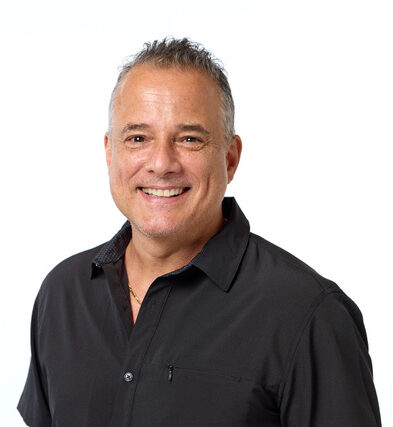
Credentials
- Licensed Marriage and Family Therapist (Florida, 1994)
- Ph.D., Marriage and Family Therapy
- Clinical Member and Approved Supervisor, AAMFT
- Core Faculty, Capella University (2006-present)
- Co-founder, Couples on the Brink
- Past President, Broward Association of Marriage and Family Therapy